.svg)

Donor Retention: The Nonprofit Guide to Donor Retention Rates & Strategies

68.5% of donors give only once and never return.[1]
That means for every 100 donors you acquire, fewer than 32 will give again next year. The rest disappear, taking their potential lifetime value with them.
Acquiring a new donor costs about 5 times more than keeping an existing one. New donor numbers dropped 10.2% in 2025, the steepest decline of any donor segment.[1]
This guide shows you how to break that cycle. You'll learn what donor retention is, why it matters, how to calculate it, and 8 proven strategies to improve it.
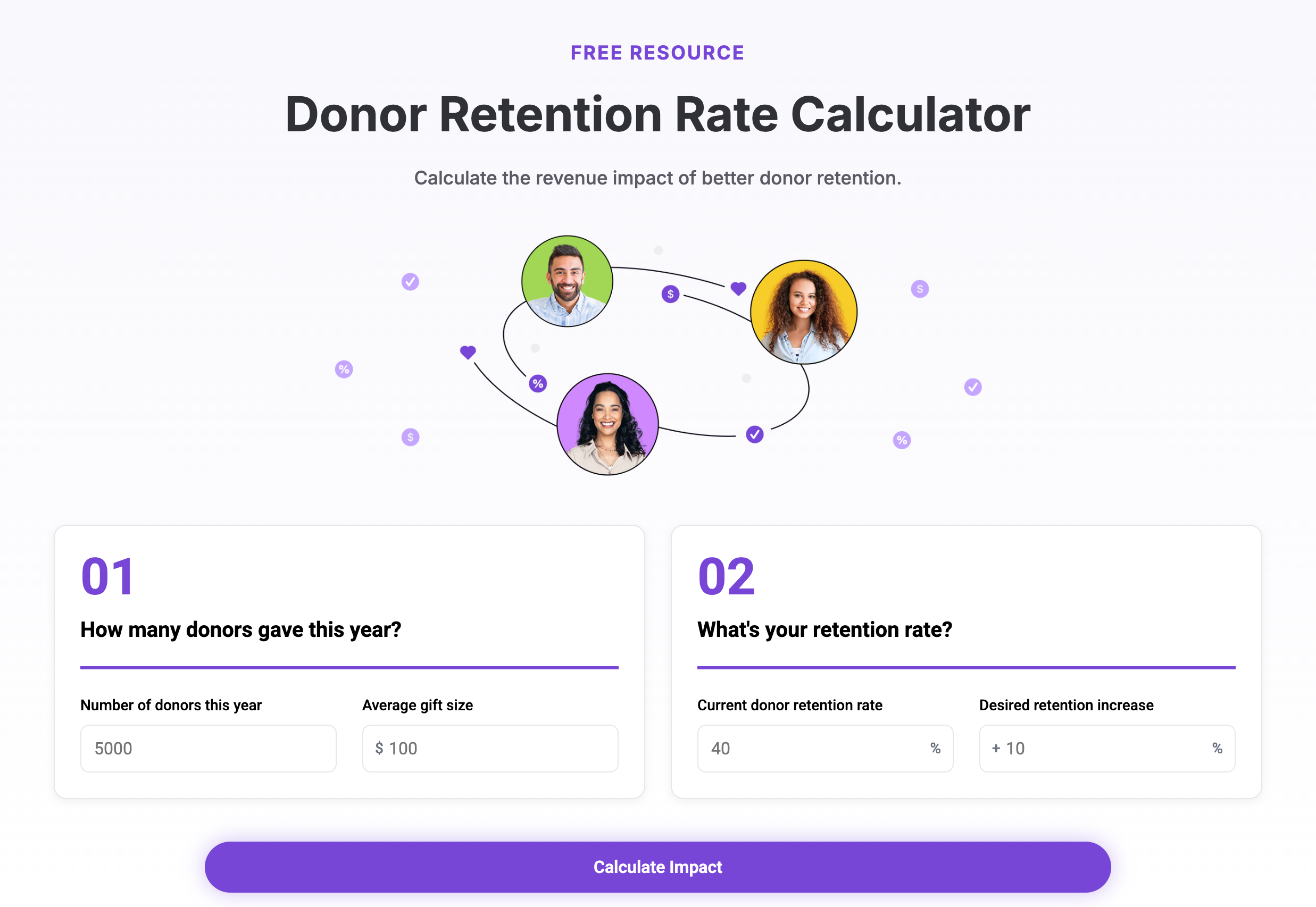
Stop guessing. Calculate your donor retention rate in 30 seconds with our free calculator.
What is Donor Retention?
Donor retention measures how many donors who gave last year give again this year.
It's the clearest indicator of donor loyalty and organizational health. High retention means donors trust your mission and see the impact of their gifts. Low retention means something in your donor experience needs fixing.
Why retention beats acquisition:
- Retained donors cost less, leading to lower fundraising costs (5x cheaper than acquiring new ones)
- They give more over time (higher lifetime value)
- They’re easier to upgrade to larger gifts
- They refer others to your organization
Strong donor retention directly supports and enhances your overall fundraising efforts by providing stability, increasing revenue, and helping you achieve your organizational goals.
What is a Good Donor Retention Rate?
The average nonprofit retention rate is 31.9%.[1] Of course, context matters when evaluating your retention rate.
Retention varies by:
- Organization size (smaller nonprofits often have higher retention)
- Mission type (religious organizations typically retain better)
- Donor segment (repeat donors retain at 43.6% vs. 14.0% for new donors)[1]
- Gift size (larger donors retain better)
Realistic retention goals:
- 30-40%: Sector average (room for improvement). This range reflects the overall donor retention rates commonly seen across the nonprofit sector.
- 40-50%: Above average (strong donor relationships)
- 50%+: Excellent (best-in-class stewardship)
Average Retention Rate Myth
Don't get discouraged if your rate is below 40%. Context matters. A 35% retention rate with strong new donor acquisition and upgrade programs can be healthier than 50% retention with stagnant growth.
Focus on your trend line. Are you improving year over year?
Donor Retention by Type
Not all donors retain equally. Understanding retention by donor type helps you prioritize efforts.
First-Time Donor Retention
Current rate: 14.0%[1]
Only 1 in 7 new donors give again. This is the sector's biggest challenge.
New donors decreased 10.2% year-over-year in 2025, the steepest decline of any segment.[1] And only 14% of those who do give return for a second gift.
Why first-time retention is so low:
- Poor or delayed thank-you process
- No connection to impact
- Donor doesn't remember giving (especially small online gifts)
- Transaction felt impersonal
The critical first 90 days:
Your first 3 months determine whether a donor returns. Send a compelling thank-you within 48 hours, show impact within 30 days, and make a second touchpoint within 90 days.
Repeat Donor Retention
Current rate: 43.6%[1]
Repeat donors are your most valuable segment. They generate 61.6% of all dollars raised[1] and are 3x more likely to give again than first-time donors.
Repeat donor retention improved 0.2 percentage points in 2025, the most stable segment during the donor count decline.[1]
Why they matter:
- Higher lifetime value
- Lower cost to steward
- More likely to upgrade
- Strong referral potential
Keep them engaged with:
- Regular impact updates
- Personalized communication
- Recognition and appreciation
- Early access to campaigns or events
Lapsed Donor Reactivation
Recapture rate: 2.0%[1]
Lapsed donors (those who gave 2+ years ago but not recently) are difficult to win back. Only 2% return.
Recaptured donors decreased 7.3% year-over-year in 2025.[1]
A donor is typically "lapsed" after:
- 12-18 months of no giving (for annual donors), a period often referred to as donor lapse, when donors become inactive and disengaged
- 60-90 days (for monthly recurring donors who cancel)
Win-back strategies:
- Survey to understand why they left
- Special reactivation offer
- Show what's changed since they last gave
Remember: reactivation still costs less than new acquisition, but prevention (keeping donors active) is cheaper than both.
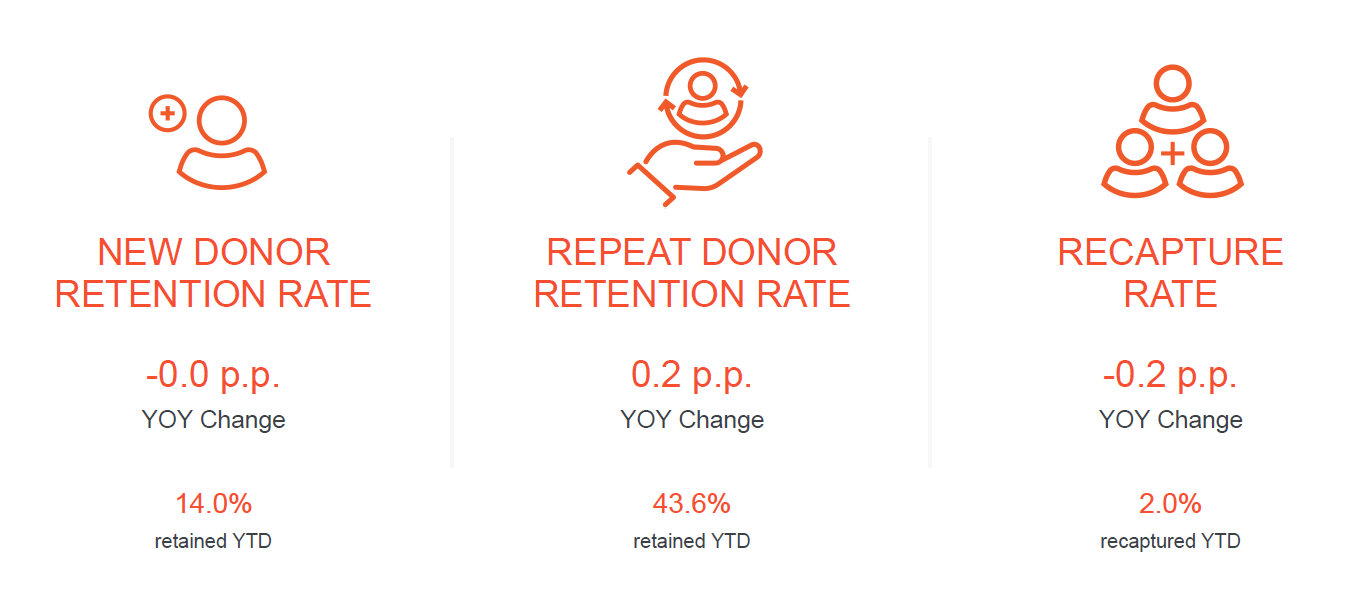
"Retention Rates by Donor Type." GivingTuesday Data Commons and Association of Fundraising Professionals. Source: FEP Q3 2025 Report
Donor Retention by Gift Size
In most cases, larger donors retain better. Smaller donors make up your volume.
Q3 2025 retention rates by donor size:[1]
- Micro ($1-$100): 21.3% retention | 50.9% of donors | 1.6% of revenue
- Small ($101-$500): 37.5% retention | 29.5% of donors | 11.5% of revenue
- Midsize ($501-$5K): 48.8% retention | 17.2% of donors | 30.6% of revenue
- Major ($5K-$50K): 52.0% retention | 2.0% of donors | 25.2% of revenue
- Supersize ($50K+): 56.6% retention | 0.4% of donors | 52.3% of revenue
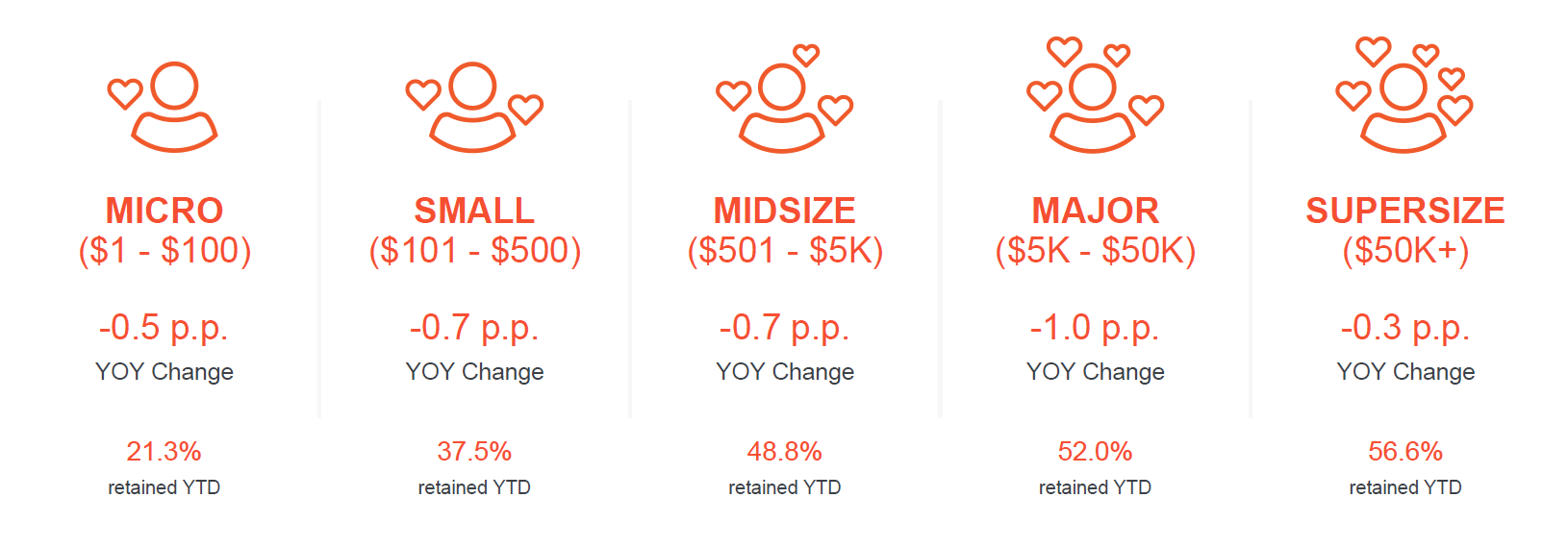
"Retention Rates by Gift Size." GivingTuesday Data Commons and Association of Fundraising Professionals. Source: FEP Q3 2025 Report
The balance:
You need high-volume micro and small donors for a healthy pipeline. Your major and supersize donors drive the majority of your revenue.
Don't neglect small donors because of low retention rates. Many of your future major donors are in that pool today.
How to Calculate Donor Retention Rate
Here’s the standard formula:
(Returning Donors in Year 2 ÷ All Donors in Year 1) × 100 = Retention Rate
Calculating your retention rate is a crucial step in any donor retention strategy, as it helps you understand donor behavior and informs your approach to long-term engagement and giving.
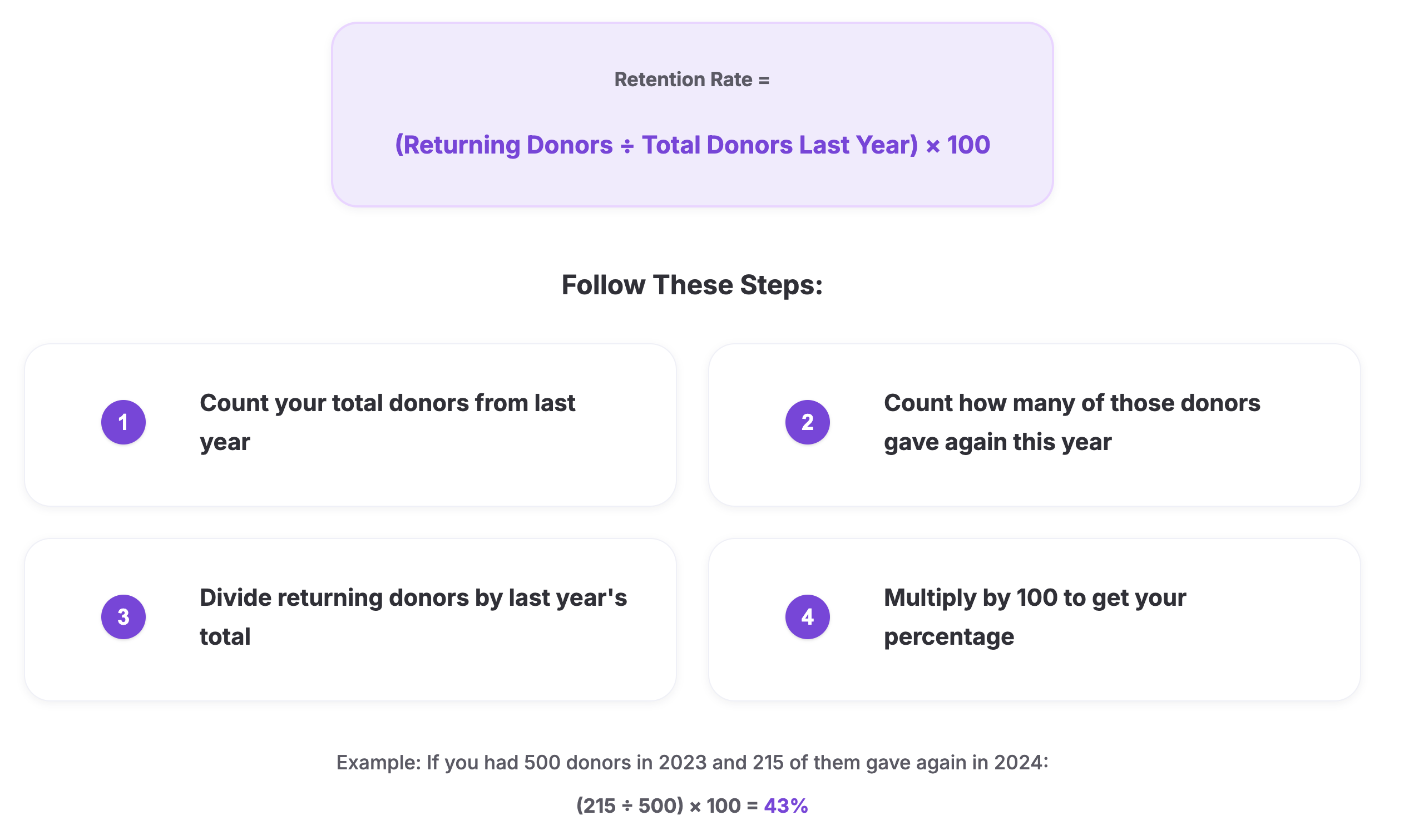
Step-by-Step Example
Year 1 (2024):
- Total donors: 2,000
Year 2 (2025):
- Donors who gave in both years: 700
Calculation:
- 700 ÷ 2,000 = 0.35
- 0.35 × 100 = 35% retention rate
Common mistakes to avoid in your calculation:
- Don't include Year 2 new donors in the denominator
- Don't count a donor as "retained" if they gave twice in Year 1 but not in Year 2
- Do exclude one-time event donors if they were never meant to be annual supporters
Different Ways to Measure Retention
Annual retention: Year-over-year (most common)
Cohort retention: Track donors by acquisition year (e.g., “How many 2023 donors are still giving in 2025?”)
Rolling retention: Last 12 months vs. prior 12 months (useful for monthly tracking)
Campaign retention: Donors who gave to a specific campaign last year who gave again this year
Channel retention: Donors acquired via specific channels (email, direct mail, events, etc.)
A centralized donor database is essential for accurately tracking these different types of donor retention, enabling effective measurement, segmentation, and communication strategies.
Tools for Tracking Retention
Manual tracking in spreadsheets works for small nonprofits. However, it doesn't scale as you grow.
What you need to track retention:
- A Donor CRM with retention reporting
- Ability to segment by type, size, campaign, and channel
- Real-time dashboards
- Automated lapse alerts
Keela tracks all of these automatically and sends alerts when donors show signs of disengagement.
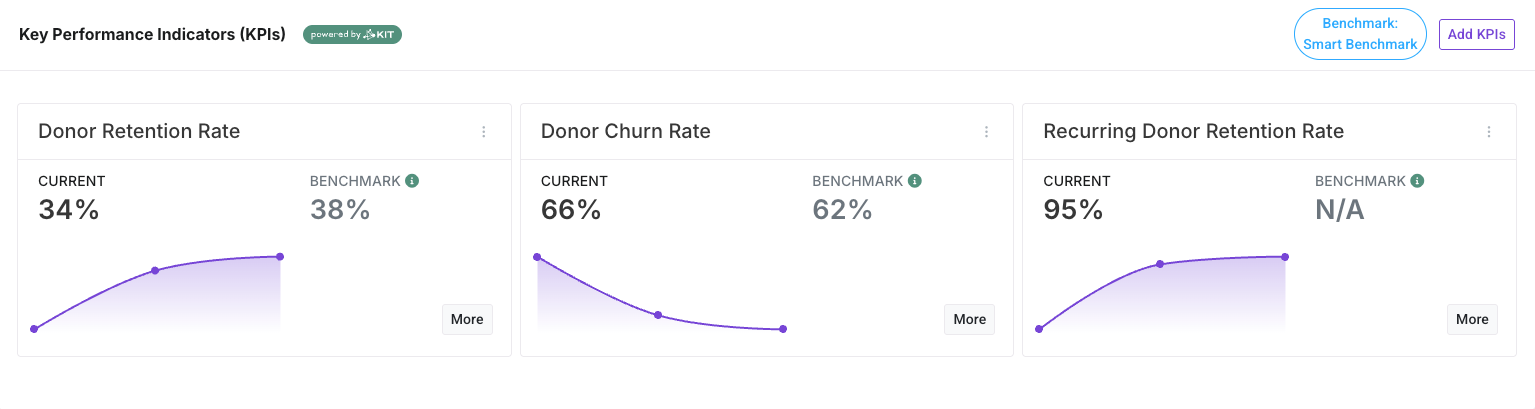
Not sure what your retention rate is? Plug your numbers into our free calculator and get your score in 30 seconds.
The Current State of Donor Retention
According to the Fundraising Effectiveness Project's Q3 2025 report (analyzing 15,080 organizations, 5.3 million donors, and $8.2 billion raised):[1]
Overall retention: 31.9%[1]
That's up 0.15 percentage points from last year, the 5th consecutive year retention has improved.[1]
The donor base is shrinking:
- Donor count down 3.0% year-over-year[1]
- New donors down 10.2% (steepest decline)[1]
- 68.5% give only once and never return[1]
Dollars raised are up 3.7%.[1]
What's happening? Nonprofits are becoming more dependent on fewer, larger donors. The top 3% of donors by gift size now account for 77.5% of all revenue.[1]
This makes retention even more critical. You can't afford to lose the donors you have.
Why Donors Stop Giving
In order to prevent attrition, you need to understand why donors leave. Often, donors feel unappreciated or disconnected from the cause, which can lead to decreased satisfaction and ultimately, a decision to stop giving. Addressing how donors feel and ensuring they feel valued and engaged is essential for improving donor retention.
The Top 7 Reasons for Donor Attrition
1. No thank-you or delayed acknowledgment
The #1 reason donors don't give again is feeling unappreciated.
2. Poor communication
Too many asks, not enough impact updates, or radio silence for months.
3. No connection to impact
Donors don't see what their gift accomplished.
4. Life changes
Financial hardship, relocation, life transitions.
5. Lost to competition
Another nonprofit in your space had better stewardship.
6. Payment failures
Recurring gifts fail due to expired cards, and the donor isn't notified.
7. Bad experience
Wrong name on receipt, donation errors, hard-to-use website, poor customer service.
The Data Behind Donor Attrition
According to Q3 2025 data:[1]
- One-time donors make up 68.5% of the donor base, the highest attrition risk
- Most donor dropoff happens in the first year (only 14% of new donors return)
- New-retained donors (those who gave for a 2nd year) dropped 9.6%
Nonprofits struggle most with activating new donors and cultivating them into repeat supporters.
The Hidden Costs of Donor Attrition
Losing a donor costs more than losing one gift.
Acquisition cost: If it costs $100 to acquire a donor, and they give $50 once and leave, you're at a net loss.
Lost lifetime value: A donor who gives $100/year for 5 years = $500. Lose them after year 1, and you lose $400 in future revenue.
Compounding effect: Poor retention forces you to acquire more donors each year just to stay flat, an unsustainable treadmill.
8 Proven Donor Retention Strategies
Here’s what works to keep donors engaged and giving. These strategies are designed to increase donor retention by building long-term relationships and encouraging repeat donations.
1. Perfect Your Thank-You Process
The 24-48 hour rule:
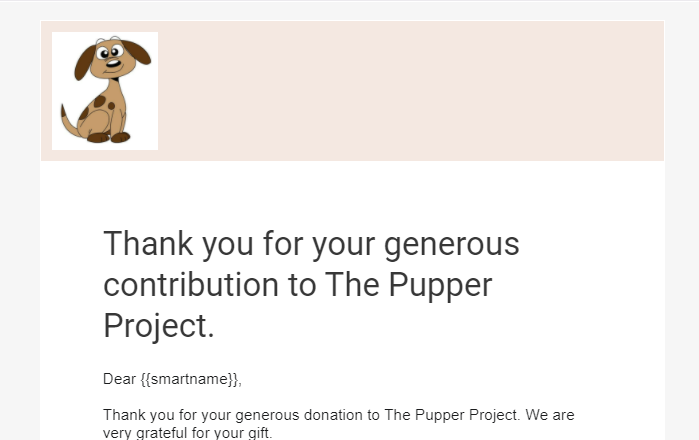
Send a thank-you within 48 hours of every gift. Personalized messages work best.
Multi-channel acknowledgment:
- Email receipt (immediate)
- Personal thank-you email or letter (within 48 hours)
- Phone call for major gifts (within 1 week)
Personalization tactics:
- Use donor's name and gift amount
- Reference their giving history ("your 3rd gift this year")
- Specific impact statement ("your $50 provides X")
Balance automation with personal touch:
Automate receipts and initial thank-yous. Add personal touches for repeat and major donors.
How Keela helps:
- Automated tax receipts sent instantly
- Customizable thank-you email workflows
- Templates for different donor segments
2. Show Tangible Impact
Donors need to see what their gift accomplished.
Impact reporting basics:
- Be specific ("Your $100 provided meals for 20 families")
- Use stories + data ("We served 10,000 meals this quarter. Here's one family's story")
- Show progress toward goals
Communication cadence:
- Thank-you: Within 48 hours
- Impact update: Within 30 days
- Quarterly newsletter: Every 90 days
- Annual report: Once per year
Make it visual:
- Photos of your work
- Infographics with key metrics
- Video testimonials
- Donor dashboards
3. Segment and Personalize
One-size-fits-all communication kills retention.
Effective segmentation strategies:
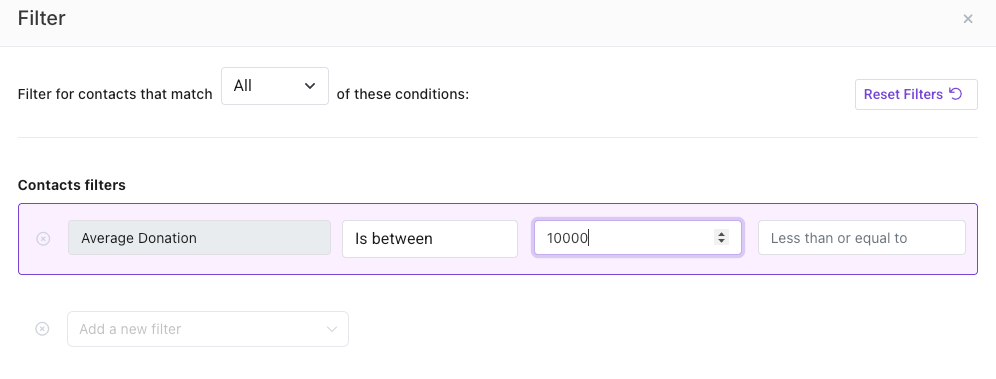
- By donor type (new, repeat, lapsed, major)
- By gift size (micro, small, midsize, major, supersize)
- By giving frequency (one-time, monthly, annual)
- By campaign or interest area
- By engagement level (highly engaged vs. at-risk)
Personalization at scale:
You can personalize email content, ask amounts, and communication frequency based on donor preferences at scale.
Behavior-based triggers:
- Send specific messages when donors take actions (make 2nd gift, upgrade, attend event)
- Alert staff when high-value donors show signs of disengagement
How Keela helps:
- Advanced segmentation by 50+ criteria
- Smart Ask feature (suggests optimal ask amounts)
- Dynamic email content
- Engagement scoring (0-100 score for every donor)
4. Optimize Recurring Giving
Recurring donors are retention gold.
The numbers don't lie (Q3 2025):[1]
- One-time donors: 19.2% retention (68.5% of donors, 46.6% of revenue)
- Donors giving 7+ times: 87.3% retention (11.0% of donors, 19.0% of revenue)
Make recurring the default:
On donation forms, pre-select monthly giving with one-time as the alternate option.
Prevent payment failures (dunning):
Credit cards expire. Set up automated emails to update payment info before recurring gifts fail.
Upgrade recurring gifts:
Ask monthly donors to increase their gift once per year. Even a $5 increase = $60 more annually.
5. Create Meaningful Touchpoints
Don't only contact donors when you need money.
Non-ask communications:
- Impact stories
- Behind-the-scenes updates
- Volunteer spotlights
- "Thank you" campaigns (no ask)
Other touchpoints:
- Event invitations (virtual or in-person)
- Volunteer opportunities
- Surveys and feedback requests
- Birthday or anniversary recognition
The 80/20 rule:
80% of your communication should be relationship-building. 20% should be asks.
How Keela helps:
- Automated donor journeys (onboarding, engagement, reactivation)
- Event management and tracking
- Volunteer hour logging
- Built-in survey tools
6. Prevent Churn Proactively
Catch donors before they leave.
Early warning signals:
- Missed recurring gift
- Declined gift (compared to last year)
- No engagement with emails (low open/click rates)
- No response to multiple touchpoints
Intervention strategies:
- Send personalized re-engagement email
- Call high-value at-risk donors
- Survey to understand concerns
- Offer different giving options (lower amount, different frequency)
Win-back campaigns for lapsed donors:
Once a donor lapses, launch a 3-6 email win-back sequence:
- "We miss you" + survey
- Impact update ("here's what you helped accomplish")
- "Last chance" re-engagement offer
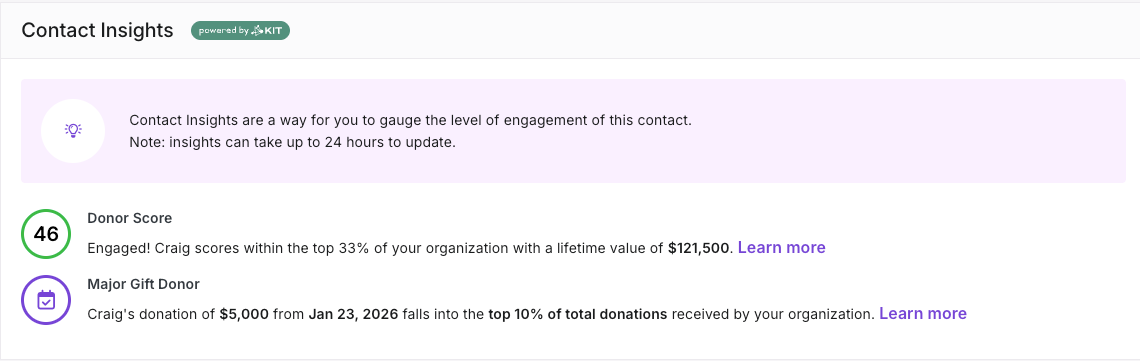
How Keela helps:
- Engagement scoring flags at-risk donors automatically
- Lapse alerts notify you when donors go quiet
- Automated win-back workflows
7. Build a Multi-Channel Strategy
Multi-channel donors have higher retention rates.
Email best practices:
- Segment your lists
- Personalize subject lines and content
- Test send times and cadence
- Use impact-focused storytelling
Direct mail still matters:
Older and major donors often prefer mail. Include it in your multi-channel strategy.
Phone outreach for major donors:
A 5-minute thank-you call dramatically improves major donor retention.
Social media engagement:
Tag donors in impact posts (with permission). Respond to comments. Show community.
SMS for urgent updates:
Use sparingly for time-sensitive campaigns or emergencies.
8. Make Data-Driven Decisions
You can’t improve what you don’t measure. Analyzing donor data is essential for identifying patterns in donor behavior and understanding why donors lapse, which helps inform strategies to boost donor retention.
KPIs to track beyond retention rate:
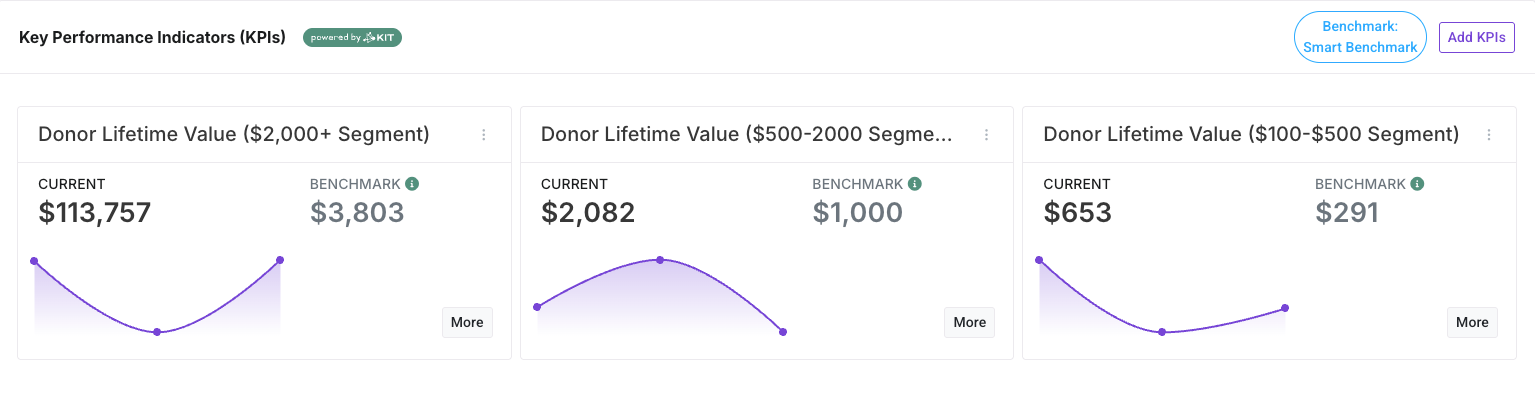
- Donor lifetime value
- Average gift size (and trends)
- Giving frequency
- Engagement score
- Lapse rate
- Reactivation rate
Tracking retention metrics is crucial for measuring and improving donor retention, as they provide insight into donor relationships, communication effectiveness, and overall fundraising health.
A/B test your stewardship:
- Test thank-you email timing and content
- Test impact report formats
- Test ask amounts and frequencies
Learn from your best donors:
Analyze your most loyal donors. What do they have in common? What touchpoints did they respond to? Replicate that experience.
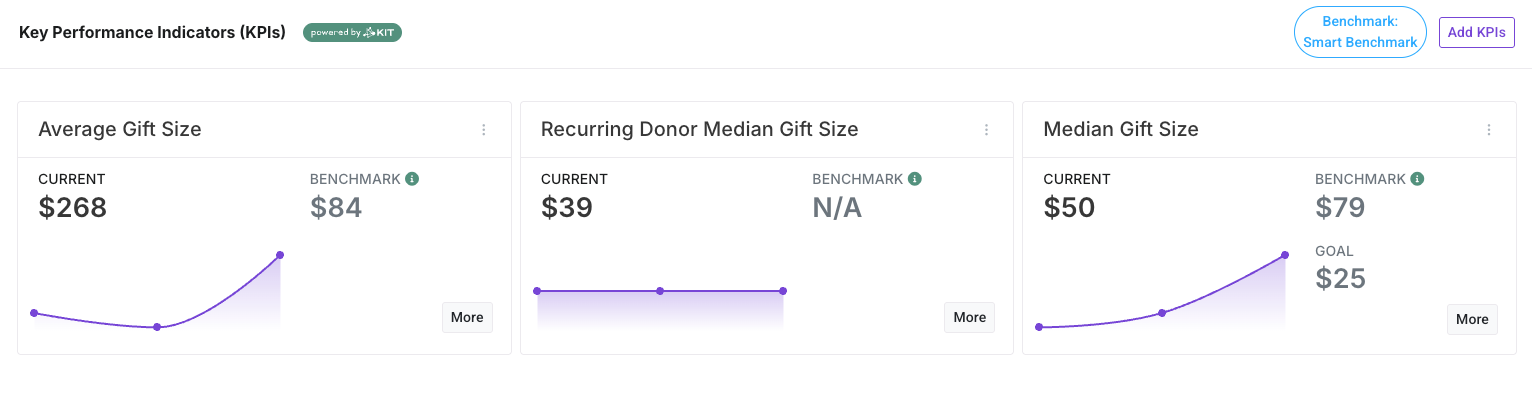
How Keela helps:
- 50+ pre-built KPI dashboards
- Custom reporting on any metric
- Predictive insights (which donors are likely to upgrade or churn)
- Donor intelligence features (lifetime value, engagement score, giving trends)
7 Common Donor Retention Mistakes
Avoid these retention killers.
1. Waiting too long to thank donors
Every day you delay reduces the likelihood they give again.
2. Only contacting donors to ask for money
This trains donors to ignore your emails.
3. Ignoring donor preferences
If they ask for quarterly emails and you send weekly, they'll unsubscribe.
4. Not tracking retention at all
You can't fix what you don't measure.
5. Treating all donors the same
A $25 donor and a $2,500 donor need different stewardship.
6. Failing to fix recurring donation issues
Payment failures lose you monthly donors. Set up dunning management.
7. Poor onboarding for new donors
The first 90 days determine whether they return. Don't waste that window.
How Technology Improves Donor Retention
Manual tracking doesn't scale.
Why Manual Tracking Fails
- Time investment: Hours spent building reports instead of talking to donors
- Human error: Missed data, wrong calculations, lost follow-ups
- Missed opportunities: No alerts when donors disengage
- No real-time insights: You find out about problems months too late
What to Look for in a Donor CRM
✅ Automated workflows (receipts, thank-yous, journeys)
✅ Segmentation by 20+ criteria
✅ Retention tracking and reporting
✅ Integration with fundraising platforms
✅ Engagement scoring
✅ Multi-channel communication (email, SMS, direct mail)
✅ Predictive analytics
How Keela Drives Better Retention
Keela is built specifically for nonprofits focused on donor retention.
Key features:
- Automated donor journeys (onboarding, thank-you, lapsed donor win-back)
- Engagement scoring (0-100 score for every contact)
- Smart Ask (suggests optimal gift amounts)
- Lapse alerts (get notified when donors go quiet)
- 50+ pre-built reports (including retention dashboards)
- Integrated email, events, and volunteer management

Keela Customer Success Story
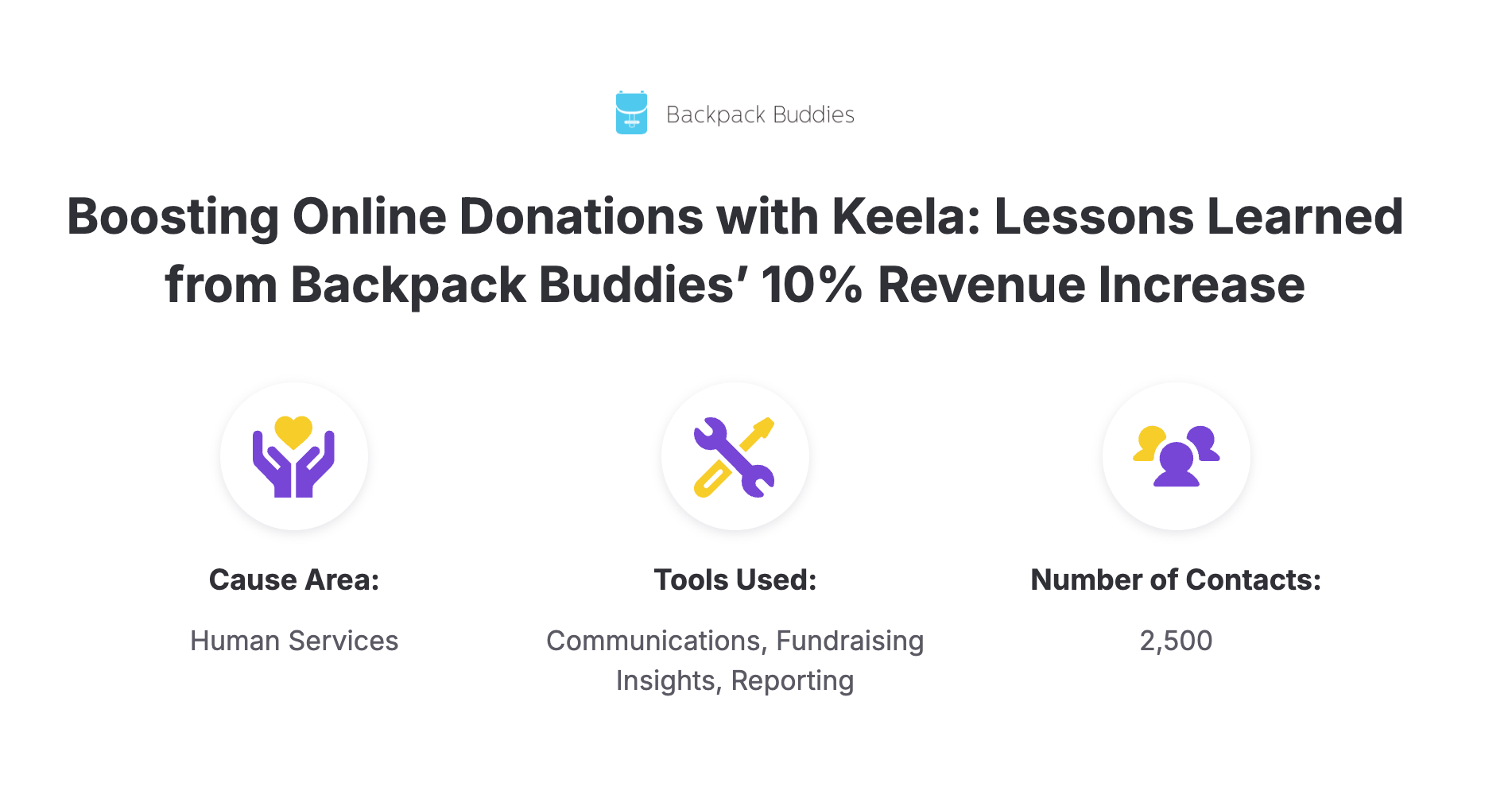
Backpack Buddies increased revenue by 10% using Keela's donor management software.
They used automated donor journeys and engagement tracking to identify at-risk donors and re-engage them before they lapsed.
What customers say about donor engagement:
"Keela has truly transformed how we operate as a non-profit. It has allowed us to deepen our relationships with supporters while making fundraising and outreach much more effortless."
Sean, IT and Grant Management
"[Keela] Changed the way our Nonprofit operates. I appreciate that I can collect volunteer and donor information, send eblasts, and collect and track fundraising."
Emmaus H., Executive Director
Your 6-Step Donor Retention Plan
Ready to improve retention? Start here.
Step 1: Calculate Your Current Retention Rate
- Use our calculator
- Break down by donor type (new, repeat, lapsed)
- Break down by gift size
- Identify your biggest gaps
Step 2: Set Realistic Goals
- Compare to industry benchmarks (31.9% average)
- Set an incremental improvement target (e.g., 35% → 38% in 12 months)
- Focus on segments with the biggest opportunity (usually first-time donors)
Step 3: Audit Your Current Stewardship
- Map your donor journey from first gift to 2nd gift
- Identify gaps (no thank-you? No impact update? No 2nd ask?)
- Survey donors: "What would make you more likely to give again?"
Step 4: Implement Quick Wins
Start with these 3:
- Fix your thank-you process (within 48 hours, personalized)
- Set up recurring gift dunning management
- Add one impact update within 30 days of each gift
These alone can lift retention 5-10%.
Step 5: Build Long-Term Systems
- Invest in donor CRM (if you're still using spreadsheets)
- Create automated donor journeys (onboarding, engagement, win-back)
- Train your team on retention best practices
- Build retention into your fundraising plan and budget
Step 6: Measure and Iterate
- Track retention monthly (rolling 12-month basis)
- Do quarterly deep dives (what worked? what didn't?)
- Annual strategy review and goal-setting
- Celebrate wins and share learnings with your team
Conclusion: Small Improvements = Big Impact
Donor retention isn't glamorous. It doesn't have the excitement of a big campaign launch or a viral social media post.
Donor retention is the most powerful lever you have to grow revenue sustainably.
Here's why:
A 5% improvement in retention (from 32% to 37%) creates an immediate 15% lift in donor count. Because this compounds, by Year 3 you could see 50%+ more active donors and 20-30% more revenue from the same cohort.
Retained donors give more, cost less, and refer others. They're your most valuable asset.
Your next steps:
- Calculate your retention rate using our free calculator
- Pick 2-3 strategies from this guide to implement this quarter
- See how Keela can help with automated workflows, engagement scoring, and retention tracking
Start small. Measure progress. Iterate.
Your donors and your mission will thank you.
Ready to improve retention? See how Keela helps nonprofits build stronger donor relationships and increase lifetime value →
Frequently Asked Questions
How do you calculate donor retention rate?
Divide the number of donors who gave in both Year 1 and Year 2 by the total donors in Year 1, then multiply by 100. For example, if 700 out of 2,000 donors from 2024 gave again in 2025, your retention rate is 35%. Use our free calculator to get your rate in 30 seconds.

What is a good donor retention rate?
The nonprofit sector average is 31.9%, so 40-50% is above average and 50%+ is excellent. Smaller nonprofits and religious organizations typically retain better than larger or secular ones. Focus on your year-over-year trend rather than a single benchmark.
What is the average retention rate for first-time donors?
Only 14.0% of first-time donors give a second gift, making this the sector's biggest retention challenge. The first 90 days are critical: send a thank-you within 48 hours, show impact within 30 days, and make a second touchpoint within 90 days.
Which donor type has the highest retention rate?
Donors who give 7+ times per year retain at 87.3%, compared to just 19.2% for one-time donors. Repeat donors retain at 43.6% and generate 61.6% of all revenue. Converting one-time donors into recurring givers is the fastest way to improve retention.
What is the 80/20 rule for donor communication?
The 80/20 rule suggests roughly 80% of revenue comes from 20% of donors. In reality, the top 3% of donors now account for 77.5% of all nonprofit revenue. This makes retention of high-value donors critical, though smaller donors may upgrade over time.