Download free, customizable donation receipt templates in PDF and Word formats. Includes templates for cash donations, in-kind gifts, recurring giving, year-end summaries, 501(c)(3) compliance, and Canadian nonprofits.
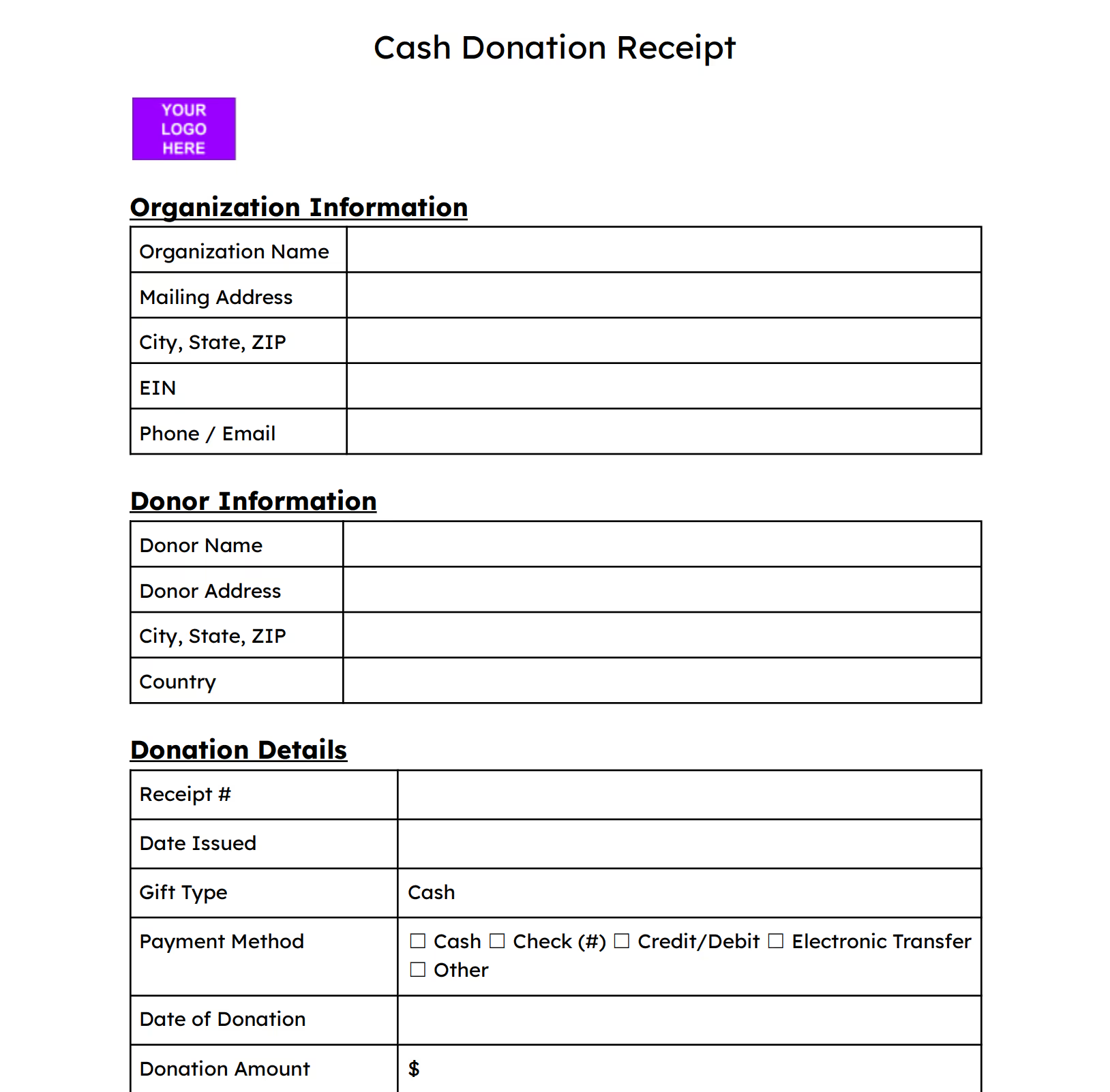
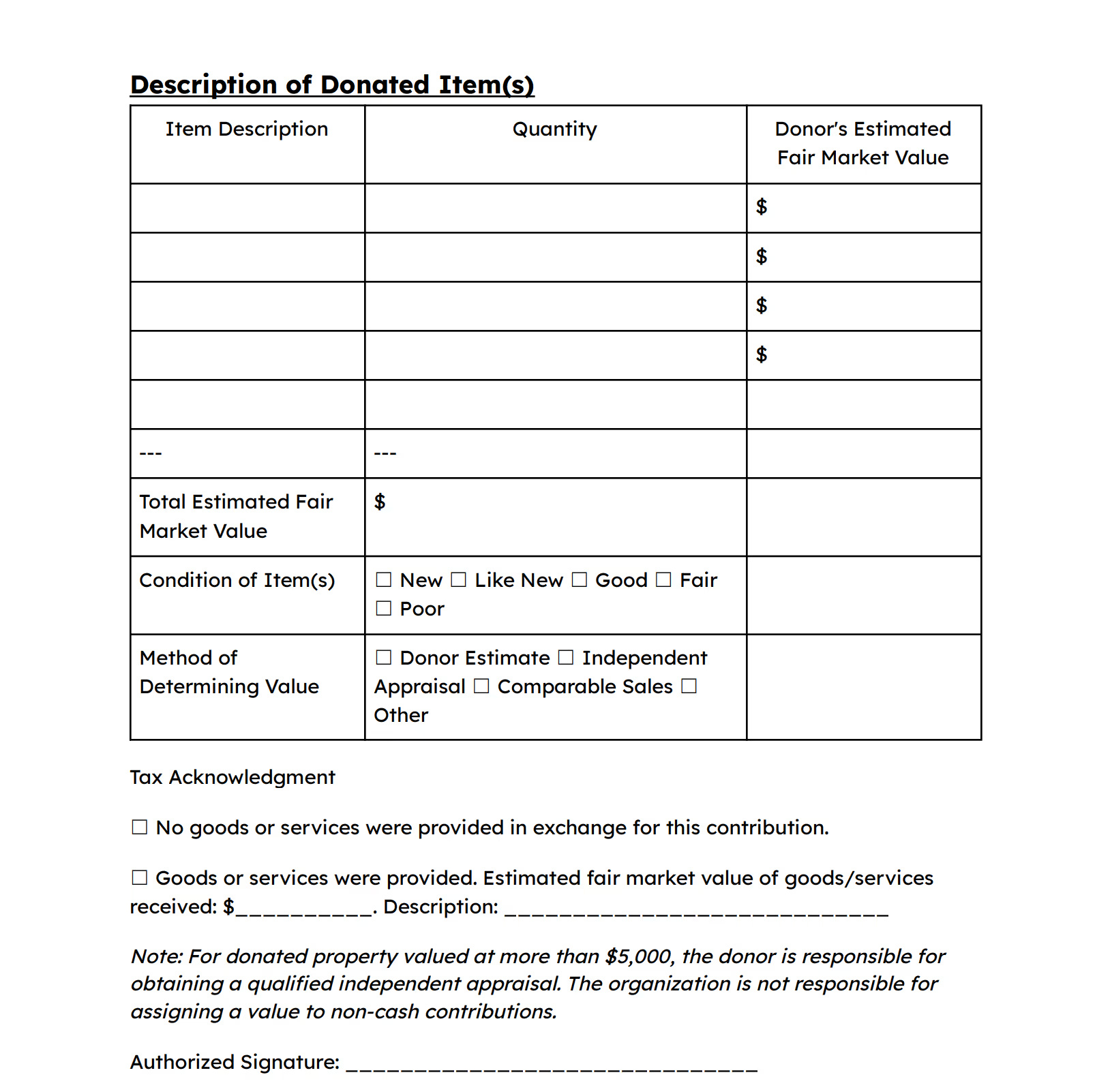
Cash Donation Receipt
For one-time monetary donations. Includes IRS-required fields for tax-deductible cash contributions + required IRS statement.
Oops! Something went wrong while submitting the form.
What to Include in a Donation Receipt
A properly formatted donation receipt protects both your nonprofit and your donors. Whether you're issuing receipts for cash gifts, in-kind donations, or recurring contributions, every receipt should include the following:
Organization name and address — The full legal name of your nonprofit as registered with the IRS or CRA
Employer Identification Number (EIN) — Your organization's tax ID (or charitable registration number in Canada)
Donor's name and mailing address — Match the donor's records for tax filing purposes
Date of the donation — The specific date the contribution was received
Donation amount or description — The dollar amount for cash gifts, or a detailed description for non-cash donations (do not assign a dollar value to non-cash gifts; the donor is responsible for determining fair market value)
Statement of goods or services — A declaration that no goods or services were provided in exchange for the donation, or a description and good-faith estimate of the value of anything that was provided
Signature of an authorized representative — An authorized person at your organization should sign the receipt
For donations of $250 or more, the IRS requires a written acknowledgment containing these elements for the donor to claim a tax deduction. Even for smaller gifts, issuing a receipt is good practice for donor stewardship and your own financial records.
IRS Donation Receipt Requirements
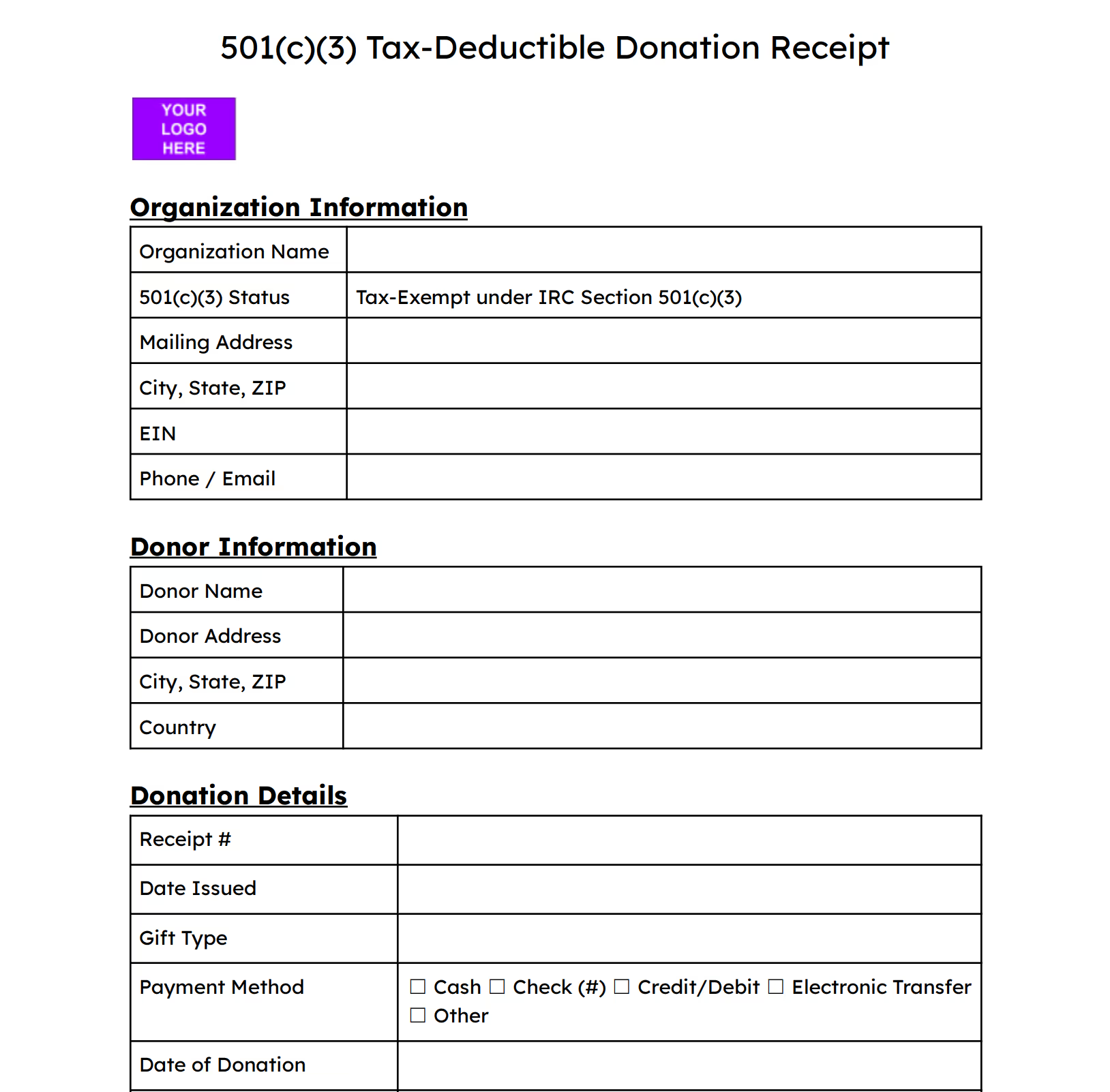
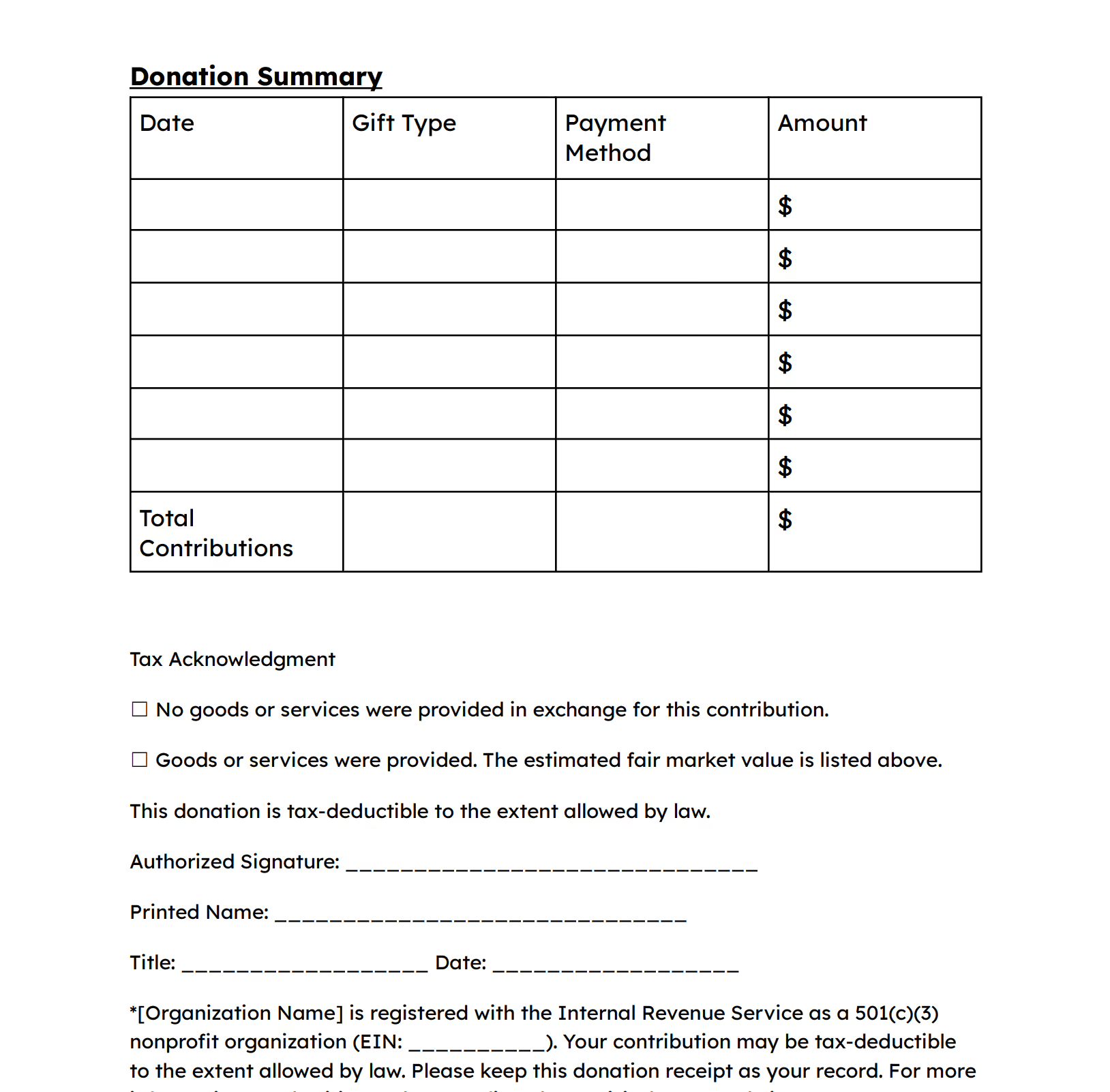
The IRS has specific rules about when donation receipts are required and what they must contain. These rules are outlined in IRS Publication 1771 and apply to any 501(c)(3) organization receiving tax-deductible contributions.
Donations Under $250
For any single donation under $250, the IRS does not require a written receipt from the nonprofit. However, the donor must keep a record of the contribution (such as a bank statement or canceled check). Issuing a receipt is a best practice that strengthens donor relationships and simplifies record-keeping.
Donations of $250 or More
Any single donation of $250 or more requires a written acknowledgment from the nonprofit. The receipt must include the organization's name, the date and amount of the donation, and a statement confirming whether any goods or services were provided in exchange for the contribution.
A pledge or promise to donate does not count as a charitable contribution until the funds are actually received. Receipts should only be issued for completed donations.
Donations Over $500
If a non-cash donation exceeds $500, the donor must file IRS Form 8283 with their tax return. The donor is responsible for this filing, but your receipt should include a detailed description of the donated property to support their claim.
Donations Over $5,000
Non-cash donations valued at more than $5,000 generally require a qualified independent appraisal. The donor is responsible for obtaining the appraisal, but your organization should be aware of this requirement when accepting high-value gifts.
Maximum Tax Deduction
Donors can generally deduct charitable contributions up to 60% of their adjusted gross income (AGI) for cash donations to qualifying 501(c)(3) organizations. Deductions for non-cash donations and contributions to certain organizations may be subject to lower limits (20% or 30% of AGI). Donors should consult a tax professional for guidance on their specific situation.
Sample Donation Receipt
Here's an example of a completed donation receipt to show what a finished receipt looks like when filled out.
How Keela Automates Donation Receipting
Free templates are a great starting point, but as your nonprofit grows, manually creating and sending receipts for every donation takes time your team could spend on your mission. Keela's donor management platform automates the entire receipting process so you never have to fill out a template again.
Automatic Receipts After Every Donation: When a donor gives through a Keela donation form, a compliant donation receipt is generated and emailed automatically. No manual work required.
Customizable Templates with Your Branding: Upload your logo and customize your receipt layout directly in Keela. Every receipt your donors receive reflects your organization's brand.
Recurring and Cumulative Receipts: For donors on a recurring giving plan, Keela handles receipts for each payment automatically. Organizations can also enable cumulative receipting, which consolidates all donations into a single year-end receipt for easier tax filing.
Download or Email Receipts Instantly: Receipts can be emailed to donors automatically, or downloaded as PDFs and printed for mailing. Your team can also manually generate a receipt for donations logged in the system.
Track Every Receipt: Every receipt is tied to the donor's profile in your CRM. You can confirm when a receipt was generated and view the donor's full giving and receipting history in one place.
A donation receipt is a written record issued by a nonprofit to a donor confirming that a contribution was received. It documents the donor's information, the date and amount of the gift, and whether any goods or services were provided in exchange. Donors use these receipts to claim tax deductions for charitable contributions.
When is a donation receipt required by the IRS?
The IRS requires a written acknowledgment for any single charitable contribution of $250 or more. For donations below $250, the donor only needs their own records (such as a bank statement). However, issuing a receipt for all donations is a best practice.
What is the difference between a donation receipt and a thank you letter?
A donation receipt is a formal document that includes the required legal elements (organization name, donation amount, goods/services statement) for tax purposes. A thank you letter is a separate communication expressing gratitude. Many nonprofits send both together, but only the receipt serves as an official tax record.
Can a nonprofit estimate the value of non-cash donations?
No. For non-cash (in-kind) donations, the nonprofit should provide a description of the donated items but should not assign a dollar value. The donor is responsible for determining the fair market value of their non-cash contribution for tax purposes.
Do Canadian nonprofits follow the same receipt rules as US nonprofits?
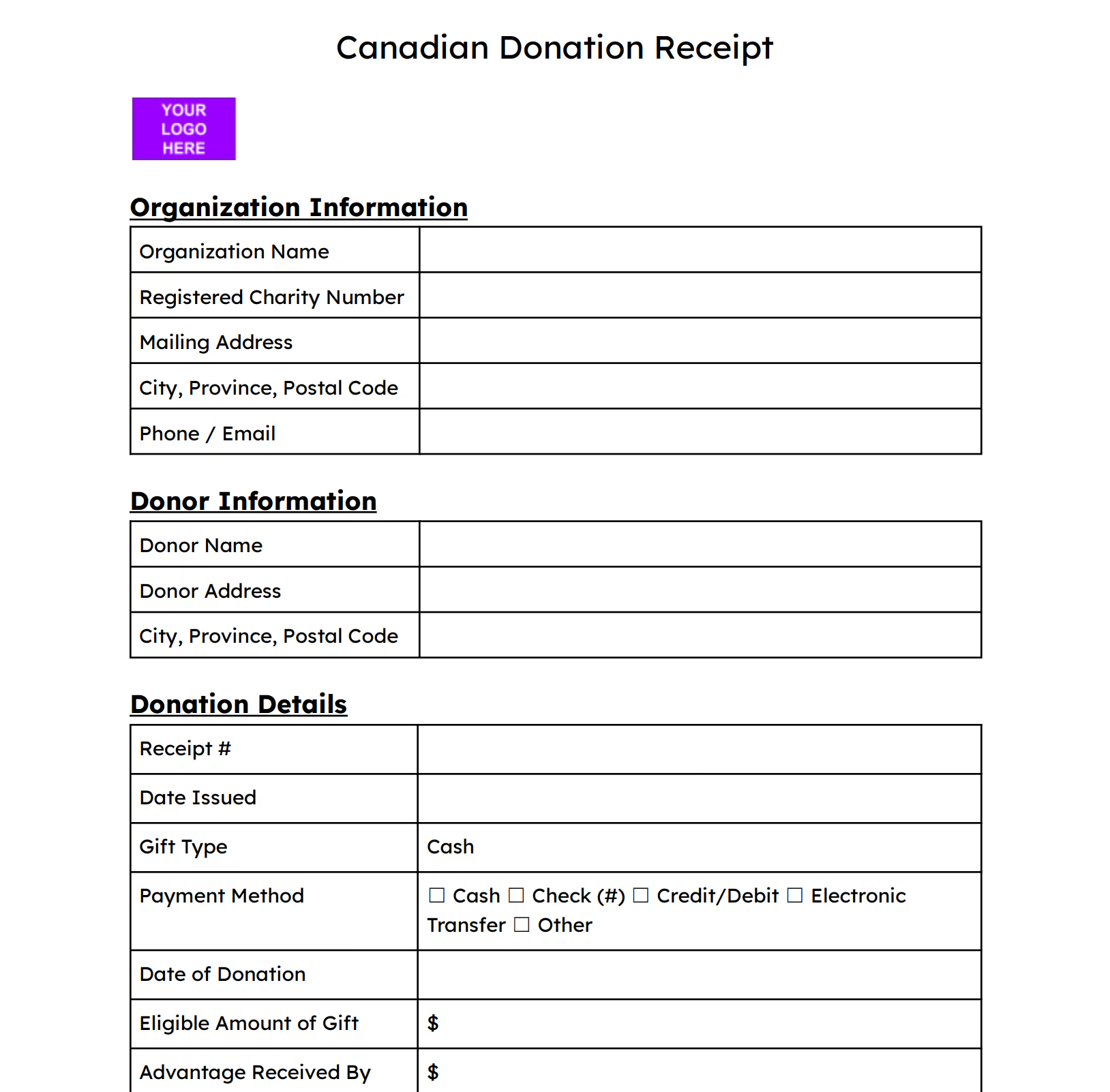
No. Canadian registered charities follow guidelines set by the Canada Revenue Agency (CRA), which has its own requirements for official donation receipts. Our Canadian donation receipt template is formatted to meet CRA standards. US nonprofits follow IRS guidelines and should use our US-specific templates.
Can I use these templates for any type of nonprofit?
Yes. These templates are designed to be generic and professional so any nonprofit or charity can use them. They are unbranded, so you can add your organization's name, logo, and details. Make sure your organization qualifies as a tax-exempt entity if you're issuing receipts for tax-deductible contributions.


.svg)