.svg)

Moves Management for Nonprofits: A Complete Guide [2026]

Most nonprofits know they need to build better relationships with their donors. Fewer have a repeatable system for actually doing it.
That's where moves management comes in. It's a structured, step-by-step approach to guiding donors through every phase of the giving lifecycle, from prospecting to long-term stewardship. And for organizations that implement it well, the results speak for themselves: higher retention, larger gifts, and a more predictable revenue pipeline.
In this guide, we'll walk you through everything you need to know about moves management, including the five core stages, how to build a plan from scratch, and the tools that make it all manageable. Whether you're new to the concept or looking to sharpen your existing process, you're in the right place.
What is Moves Management?
Moves management is a fundraising strategy that breaks the donor relationship into a series of intentional actions, or "moves." Each move is designed to deepen the relationship and bring the donor one step closer to making (or increasing) a gift.
The concept was originally developed by David Dunlop at Cornell University in the 1980s for major gift fundraising. Today, it's used by nonprofits of all sizes to manage relationships across every giving level, from first-time donors to legacy supporters.
At its core, moves management is built on a few key principles:
- Individualization. Treat every donor as a unique person with specific interests, preferences, and giving capacity.
- Intentional relationship building. Foster trust through consistent, personalized engagement over time.
- Data-driven decisions. Track every interaction so you can identify patterns, spot opportunities, and refine your approach.
- Cross-team collaboration. Give your entire fundraising team visibility into donor relationships so nothing falls through the cracks.
Think of it this way: if your donor database is the "who," moves management is the "what happens next."
Moves management allows you to properly recognize and thank donors for their contributions, and provide opportunities for continued engagement and involvement with your organization.

Collaboration
Gone are the days of working in silos. Moves management encourages cross-departmental collaboration and communication to ensure a cohesive moves management approach across your organization.
Data-Driven Decision Making
Using data and insights to inform your moves management strategy is what sets it up for success. Continuously testing and refining your approach based on results of your data analysis is the secret sauce to moving your donors through their journeys.
Why Moves Management Matters
The average nonprofit donor retention rate hovers around 40% to 45%, according to the Fundraising Effectiveness Project. That means more than half of your donors won't give again next year. And it costs significantly more to acquire a new donor than to retain an existing one.
Moves management directly addresses this problem:
- Higher donor retention. When supporters feel known and valued, they stick around. Organizations with structured stewardship programs consistently outperform those without.
- Larger gifts over time. By understanding a donor's capacity and interests, you can make smarter, better-timed asks that lead to larger and more frequent contributions.
- A predictable revenue pipeline. When you can see where every donor sits in their journey, you can forecast revenue more accurately and plan campaigns with confidence.
- Better team coordination. A shared moves management system eliminates guesswork about who last spoke with a prospect and what the next step should be.
Increased Donor Retention
By implementing moves management strategies, you can help to build deeper, more personalized relationships with your donors. This can lead to increased major donor loyalty, repeat giving, and a higher overall donor retention rate.
Greater Giving Potential and Larger Gifts
By understanding your donors' interests, preferences, and giving capacity, you can tailor your engagement and solicitation strategies to match their needs. This can lead to larger and more frequent gifts over time, as donors become more invested in your organization and its mission.
Improved Donor Relationship Management and Trust
By providing personalized attention and engagement opportunities to your donors, you can help to build a stronger sense of trust and partnership with your supporters. This can lead to increased donor satisfaction, improved donor experiences, and a deeper sense of connection to your organization.
More Effective Fundraising Strategies
By tracking and analyzing donor interactions with your organization, you can gain valuable insights into which strategies are most effective for engaging and soliciting donations. This can help you to optimize your fundraising efforts over time and achieve better results.
Positive Donor Experience
Moves management can help to encourage donors and create a positive donor experience by providing a clear path for donor engagement and stewardship. By making donors feel valued and appreciated, you can encourage continued support and involvement with your organization over time.
The Moves Management Stages
Moves management involves breaking down the fundraising process into five distinct stages, each of which is designed to help you build stronger relationships with your donors and achieve better fundraising results. The five moves management steps are:
1. Identification
The first stage of moves management is identifying potential donors who may be interested in supporting your organization. For example, you can use your organization's donor database to identify current donors who have made gifts in the past or use online research to find individuals who have supported similar causes in the past.
Example in action: A mid-size animal rescue reviews its database and identifies 45 lapsed donors who gave $250 or more two years ago but haven't given since. These supporters clearly had affinity for the mission, so they enter the pipeline as reactivation prospects
2. Qualification
The next stage is qualification, where you determine whether potential donors have the capacity and willingness to make a gift. For example, you could conduct a wealth screening of prospective donors to determine their giving capacity or conduct a survey to understand their interests and motivations.
During this phase, it's a good idea to use a CRM that integrates wealth screening tools into the database, such as Keela, so that you can gain a holistic view of your donors and best understand their capacity to give.
Example in action: The animal rescue runs a wealth screening on those 45 lapsed donors and discovers that 12 have significant giving capacity. Eight of them also attended a gala in the past. These 12 move forward as qualified prospects.
3. Cultivation
Donor cultivation strategies involve building relationships with donors over time (ie. cultivating donor relationships!). For example, you could invite donors to events, provide them with newsletters or updates about your organization's progress, and offer them volunteer opportunities. By keeping donors engaged and informed while managing the donor cultivation cycle, you can build trust and establish a deeper connection with them.
Example in action: Over the next several weeks, the rescue sends each of the 12 prospects a personalized impact report showing what their previous gift accomplished. Six accept an invitation for a behind-the-scenes shelter tour. Two reach out proactively to ask about giving again.
4. Solicitation
The solicitation stage involves making an ask for a donation. For example, you could send a direct mail appeal, make a phone call to a major donor, or use crowdfunding platforms to solicit gifts from repeat donors or a larger group of supporters. By tailoring your solicitation approach to each donor's interests and preferences, you can increase your chances of success.
Example in action: The development director meets with each of the six tour attendees individually, presenting a personalized proposal tied to a specific program. Four of them make gifts ranging from $500 to $2,500.
5. Stewardship
The final stage of the moves management cycle is stewardship, which involves thanking donors for their gifts and providing opportunities for continued engagement. For example, you could send personalized thank-you letters, recognize donors on your website or social media channels, or invite them to exclusive donor events. By showing your appreciation and keeping donors engaged, you can build stronger relationships with them and increase their likelihood of making future gifts.
Example in action: Each donor receives a handwritten thank-you card within two days. A month later, they get a photo and short story about an animal their gift directly helped. Three months later, they're invited to an exclusive donor appreciation event. Two of the four are eventually approached for the rescue's capital campaign at the $5,000 level.

Implementing Moves Management in Your Nonprofit
If you're ready to implement moves management in your nonprofit, here are some steps you can take to get started:
1. Set up a moves management system
The first step is to establish a moves management system that works for your organization. This can involve identifying the key stages of the moves management process, establishing clear roles and responsibilities for your fundraising team, and creating a system for tracking and analyzing donor interactions.
2. Identify and segment your donors
The next step is to identify and segment your donors based on their interests, giving capacity, and engagement level. This can involve conducting wealth screenings, analyzing major donor behavior data, and segmenting donors based on their interests or demographics.
3. Tailor your engagement strategies
Once you've identified and segmented your donors, you can tailor your engagement strategies to match their preferences and needs. This can involve sending personalized communications, providing exclusive engagement opportunities, and using targeted marketing campaigns to reach specific segments of your major donor base.
4. Track and analyze donor interactions
To make the most of your moves management system, it's important to track and analyze donor interactions over time. This can involve using a donor management system to track donor behavior data, conducting regular recurring donor surveys, and analyzing the results of your fundraising campaigns to identify areas for improvement.
Best Practices for Moves Management
There is no one right way to build an effective moves management strategy at your organization, but there are a few best practices that can help guide you along the way. Here are a few best practices for moves management.
1. Focus on donor engagement
At the heart of moves management is a focus on donor engagement. By creating meaningful opportunities for donors to connect with your organization and its mission, you can build stronger relationships with your supporters and increase the likelihood of future giving.
2. Personalization is key
To be effective, moves management must be personalized to each donor's interests, preferences, and giving capacity. By taking the time to understand each donor's unique needs, you can tailor your engagement and solicitation strategies to match their interests and increase their likelihood of giving.
3. Relationship building takes time
Building strong relationships with your donors takes time and effort. Effective moves management involves creating a clear path for donor engagement and stewardship and providing meaningful opportunities for involvement and recognition.
4. Data is essential
To optimize your moves management strategies, it's essential to use data to inform your decisions. This can involve tracking donor behavior data, analyzing the results of your fundraising campaigns, and conducting surveys to better understand donor preferences and needs.
5. Communication is critical
Effective moves management also involves clear and consistent communication with your donors. This can involve regular updates on your organization's progress, personalized communications, and providing opportunities for feedback and input from donors.
6. Set realistic portfolio sizes
A major gift officer can typically manage 80 to 150 active relationships effectively. If your team is stretched too thin, the quality of engagement drops and donors notice. Be realistic about capacity and prioritize accordingly.
7. Automate the repeatable, personalize the critical
Not every move needs to be manual. Automated email sequences, task reminders, and stage-based triggers can handle the operational work so your team can focus on the high-touch moments that actually build relationships. For example, you can automate a welcome series for new donors while reserving personal phone calls for major gift prospects.
Tools and Technology for Moves Management
If you're looking to improve your nonprofit's moves management strategies, technology can be a powerful tool to help streamline your efforts and achieve better results. Here's an overview of how tech solutions and moves management software can help nonprofits with moves management, as well as the five most important tools you should be using:
1. Donor management software
Your CRM is the backbone of moves management. Look for one that lets you create custom pipeline stages, move contacts between stages (manually or through automation), and track every interaction on the contact profile. Pipeline management designed for nonprofit fundraising, with features like stage-based goals and completion tracking, is a significant advantage over generic CRM tools.
2. Wealth screening tools
Wealth screening helps you prioritize your pipeline by identifying donors with the capacity to make major gifts. The most useful tools integrate directly into your CRM so you can see capacity data alongside engagement history on the same contact record.
3. Analytics tools
Look for tools that offer pipeline-level reporting, stage conversion rates, and fundraising forecasting. The ability to track KPIs like donor retention rate, average gift size, and pipeline velocity will help you continuously optimize your approach.
4. AI-powered solutions
AI can surface patterns in your donor data that would take hours to find manually. Features like donor scoring, engagement predictions, and personalized ask amount recommendations help your team prioritize the right donors at the right time with the right amount.
5. Automation tools
The best systems let you set triggers that automatically move donors between stages based on actions (like making a donation or attending an event), send personalized emails at key moments, and create tasks for your team when a donor reaches a critical stage.
Thrive in Evolving Landscape of the Nonprofit Sector with the Help of Keela!
See how Keela’s suite of intelligent tools are designed to address the ever-changing and diverse needs of the nonprofit sector.
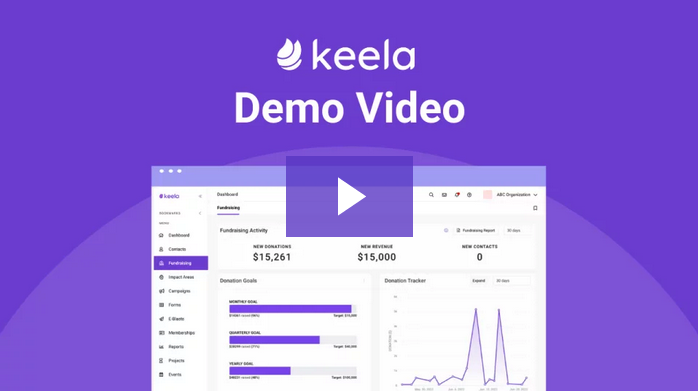
To integrate these moves management tools into your fundraising strategies, it’s important to create a clear plan for how you’ll use each tool to achieve your fundraising goals. This can involve setting up automated workflows, establishing clear roles and responsibilities for your fundraising team, and tracking and analyzing the results of your fundraising campaigns over time.
Keela can help any organization set up an effective moves management strategy. With donor tracking, effortless segmentation, automated donor journeys, AI-powered donation forms, and more, Keela can support your organization with every phase of the donor journey. There’s a reason why Keela’s clients raise up to 46% more in their first year with Keela!
Conclusion
Moves management isn't complicated, but it does require intention. By breaking the donor journey into clear stages and treating every interaction as a deliberate step forward, your nonprofit can build the kind of relationships that lead to lasting, growing support.
The organizations that get this right don't just raise more money. They build a community of supporters who believe in their mission and stick around for the long haul.
Frequently Asked Questions
What is moves management?
Moves management is a fundraising strategy that guides donors and prospects through staged moves like prospecting, cultivation, solicitation, and stewardship.

What are the five stages of moves management?
The five stages are Identification, Qualification, Cultivation, Solicitation, and Stewardship, mapping the donor life cycle and solicitation path.
How does moves management benefit your nonprofit?
It improves donor retention, increases giving potential and fundraising revenue, strengthens relationships, and fosters a positive donor experience.
What tools should you use for moves management?
Use donor management software, wealth screening, analytics tools, AI-powered solutions, and automation tools to track, segment, and engage donors.
How can Keela support moves management?
Keela offers donor tracking, effortless segmentation, automated donor journeys, and AI-powered donation forms to support every phase of the donor journey.